

Description
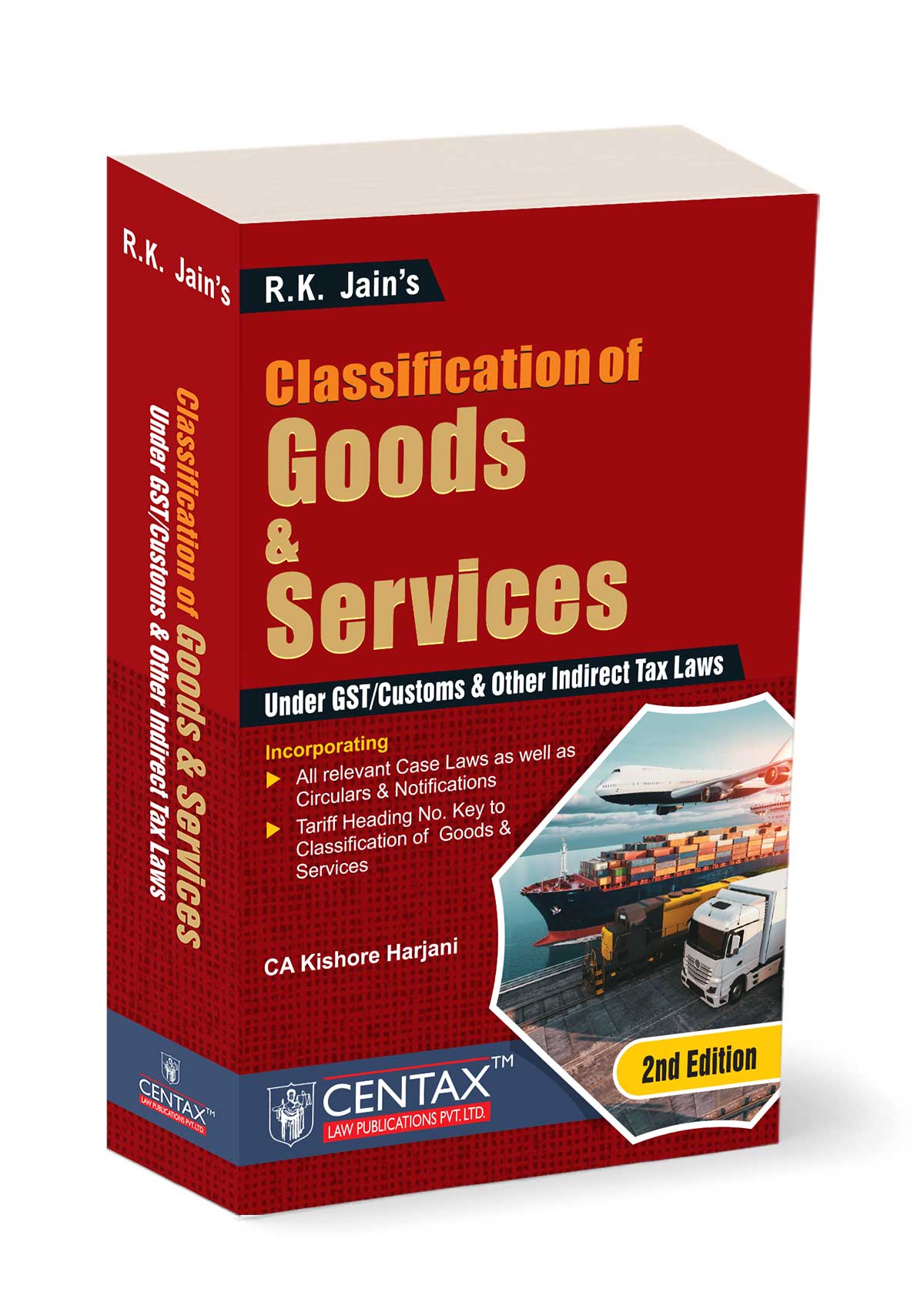
Classification of Goods & Services under GST, Customs & Other Indirect Tax Laws is a definitive, litigation-grade reference work devoted to one of the most technically complex and dispute-intensive areas of Indian indirect taxation—classification. Far from being a mere tariff or rate-selection exercise, classification lies at the heart of indirect tax compliance and controversy. It determines not only the applicable GST rate or customs duty, but also eligibility for exemptions, valuation linkages, input tax credit availability, import and export treatment, applicability of trade policy restrictions, preferential tariff benefits under FTAs, and ultimately, litigation outcomes. This book approaches classification as a structured legal discipline, governed by statutory rules, interpretative principles, administrative guidance, and judicial precedent. It integrates doctrinal clarity with practical applicability. This Edition reflects the maturity of post-GST classification jurisprudence while preserving continuity with principles developed under the erstwhile Central Excise, Service Tax, and Sales Tax regimes. What distinguishes this publication is its dual character. It functions simultaneously as:
- A conceptual rulebook, explaining how classification must be undertaken under GST and Customs, and
- A judicial classification compendium, showing how goods and services have been classified by courts, tribunals, and authorities over time, supported by circulars and notifications.
The result is a single, authoritative volume that supports decision-making, compliance, and defensible litigation strategy.
This book is designed for professionals and institutions for whom classification accuracy is critical and consequential, including:
- GST and Customs Practitioners handling advisory, audits, and disputes
- Chartered Accountants, Cost Accountants, and Indirect Tax Consultants
- Legal Professionals appearing before adjudicating authorities, tribunals, and courts
- Corporate Tax, Finance, and Supply-chain Teams dealing with rate disputes and classification risk
- Importers, Exporters, Manufacturers, and Service Providers
- Departmental Officers, Audit Teams, and Revenue Authorities
- Advanced Students and Researchers specialising in indirect tax law
The Present Publication is the 2nd Edition, updated till 31st January 2026. It is authored by CA. Kishore Harjani, with the following noteworthy features:
- [End-to-end Classification Framework] Comprehensive treatment of classification of both goods and services across GST, Customs, and allied indirect tax laws
- [Tariff Heading No. – Key to Classification] Dedicated Tariff Heading Number Keys for goods and services, enabling rapid location of judicially settled classifications
- [HSN & GRI-Centric Analysis] Detailed explanation of the Harmonised System of Nomenclature (HSN), General Rules of Interpretation (GRI), Section Notes, Chapter Notes, and explanatory notes, aligned with Indian law
- [GST–Customs Alignment Explained] Demonstrates how GST classification of goods follows the Customs Tariff framework, ensuring consistency in interpretation and rate application
- [Services Classification Decoded] Clear explanation of the GST services classification scheme under Chapter 99, including its linkage with CBIC explanatory notes and the UNCPC framework
- [Extensive Judicial Coverage] Exhaustive compilation of classification rulings under Central Excise, Service Tax, VAT, GST, and Customs, reflecting continuity and evolution of principles
- [Circulars & Notifications Integrated] Relevant CBIC circulars, instructions, rate notifications, and press releases are embedded within the classification discussion
- [Composite & Mixed Supply Analysis] In-depth statutory and judicial analysis of bundled supplies, with practical illustrations and tax impact assessment
- [Latest Judicial Classification] Dedicated coverage of recent and emerging classification decisions to reflect current jurisprudential trends
The book covers classification as a legal and operational process, addressing:
- Constitutional and statutory foundations of classification
- Classification schemes under GST and Customs
- Harmonised System of Nomenclature (HSN) and its Indian application
- General Rules of Interpretation and explanatory notes
- Goods vs services distinction and borderline disputes
- Composite and mixed supplies under GST
- Valuation-linked and exemption-driven classification issues
- Import/export and trade policy implications of classification
- Judicial evolution from 1978 to the contemporary GST regime
- Administrative guidance through circulars and notifications
The publication is organised into two deeply integrated divisions that balance conceptual understanding with judicial application.
- Division One | Conceptual Overview – This division establishes the legal mechanics and methodology of classification, structured into seven chapters:
- Introduction – Explains the purpose of classification and why it is foundational to indirect taxation—covering its impact on rates, exemptions, compliance, penalties, and disputes
- Classification of Goods under GST in India – Detailed treatment of HSN-based classification under GST and its statutory linkage with Customs Tariff Act interpretations
- Classification of Goods under Customs Law in India – Exhaustive analysis of classification under the Customs Tariff Act 1975, including:
- Rules of Interpretation
- Section and Chapter Notes
- WCO explanatory notes and advisory opinions
- Judicial principles governing tariff interpretation
- Classification of Services under GST in India – Practical explanation of service classification under Chapter 99, including rate notifications, SAC structure, and explanatory guidance
- Principles and Methods of Classification – Step-by-step application of interpretative rules, supported by judicial tests, doctrines, and illustrations
- Specific Issues and Challenges in Classification – Addresses complex and recurring disputes such as:
- Goods vs services
- Multi-component and bundled supplies
- Valuation-driven classification conflicts
- Concept of Composite and Mixed Supply under GST – Detailed statutory and judicial analysis of bundled transactions, tax implications, and compliance outcomes
- Division Two | Judicial Classification – This division transforms the book into a litigation and advisory reference tool
- Judicial Classification of Goods – Alphabetical compilation of goods classifications under GST, Customs, and legacy laws, supported by judicial reasoning and circulars
- Tariff Heading No. Key | Goods – Enables practitioners to locate relevant case law directly by tariff heading
- Judicial Classification of Services – Alphabetical compilation of service classifications with evolving jurisprudence
- Tariff Heading No. Key | Services – Facilitates rapid identification of judicial positions under specific SAC headings
- Latest Judicial Classification – Dedicated section capturing recent and emerging classification rulings for both goods and services